
A sample you can explain, line by line.
Klerum turns a raw loan trial into a review population built from your methodology's rules. Every relationship in the sample says which rule put it there, and the coverage it adds is on screen before you finalize.
Rules, read top to bottom.
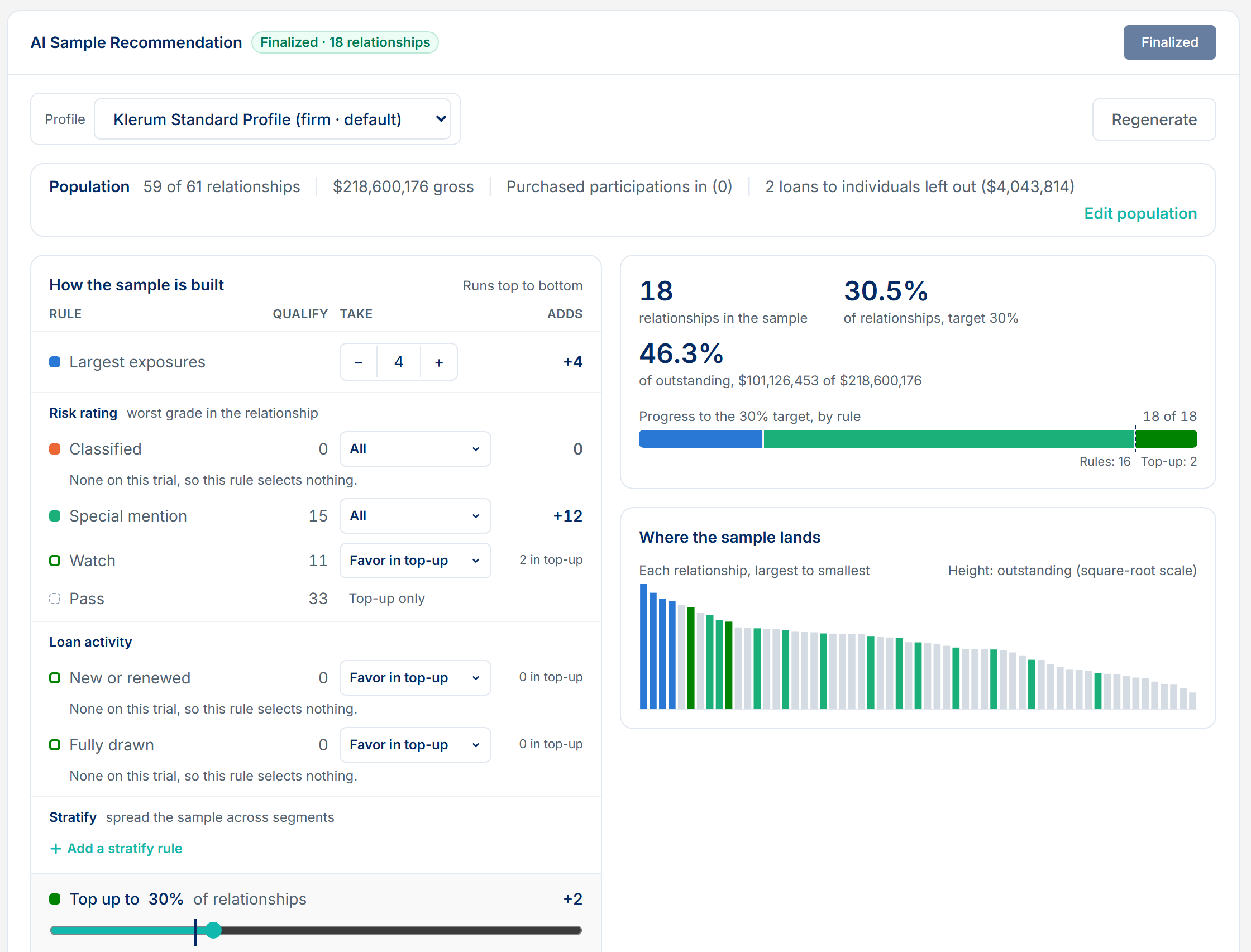
The Sample tab is one recipe that doubles as the chart legend. Each rule adds relationships in order, and the chart shows how much of the sample, and the balance, each one contributed against the coverage target.
Largest exposures
The top relationships by balance, always in.
Risk rating ladder
Classified, Special Mention, and Watch: none, favor, at least a count or percent, or all.
Loan activity
New or renewed loans and fully drawn lines, as a quota or a preference.
Stratify
Coverage across loan type, sector, loan officer, or exposure band.
Top-up
Fills to the coverage target, largest first, ranking favored credits ahead.
Pins
Reviewer decisions, always in or always out, kept across every re-run.
From a raw trial to a finalized sample, in four steps.
Load the loan trial
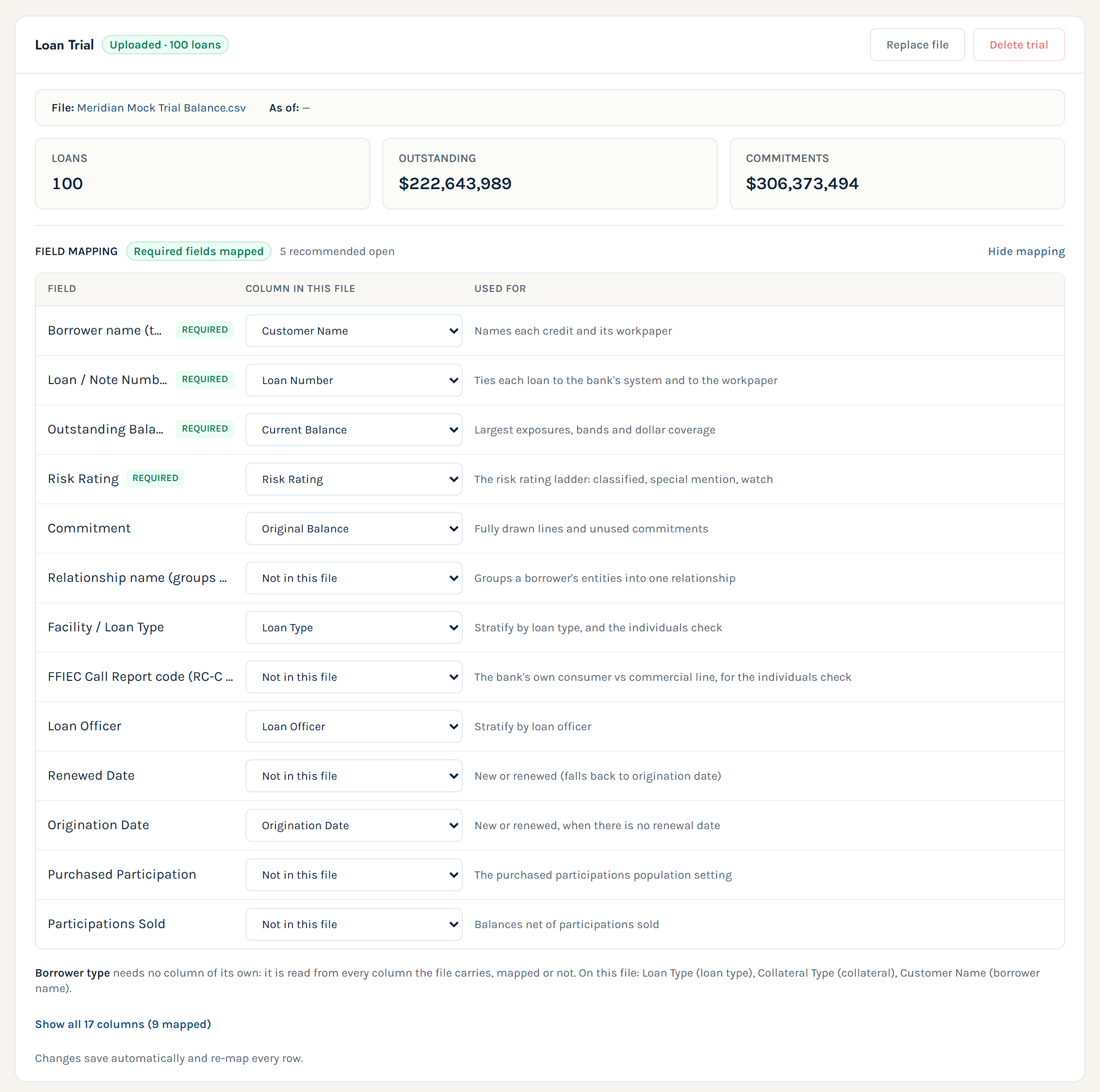
Upload the bank's trial balance as CSV. Klerum scores every header to map columns by best match, remembers the bank's mapping for next time, and will not build a sample until the key fields (borrower, loan number, balance, risk rating) are mapped.
Clean the population
Loans roll up by relationship. Consumer credit is kept out using the FFIEC call code first, then borrower type, tax ID format, and loan type, and the population sheet lists exactly which columns it used.
Build it with rules
Start from your engagement profile and adjust live: largest exposures, the risk rating ladder, loan activity, Stratify, and the top-up. The chart and coverage meter move as you change a setting.
Pin, review, finalize
Tick a credit in or out and it becomes a pin that survives every re-run. When the sample is right, finalize it and every selected relationship becomes a workpaper.
The why is on every row.
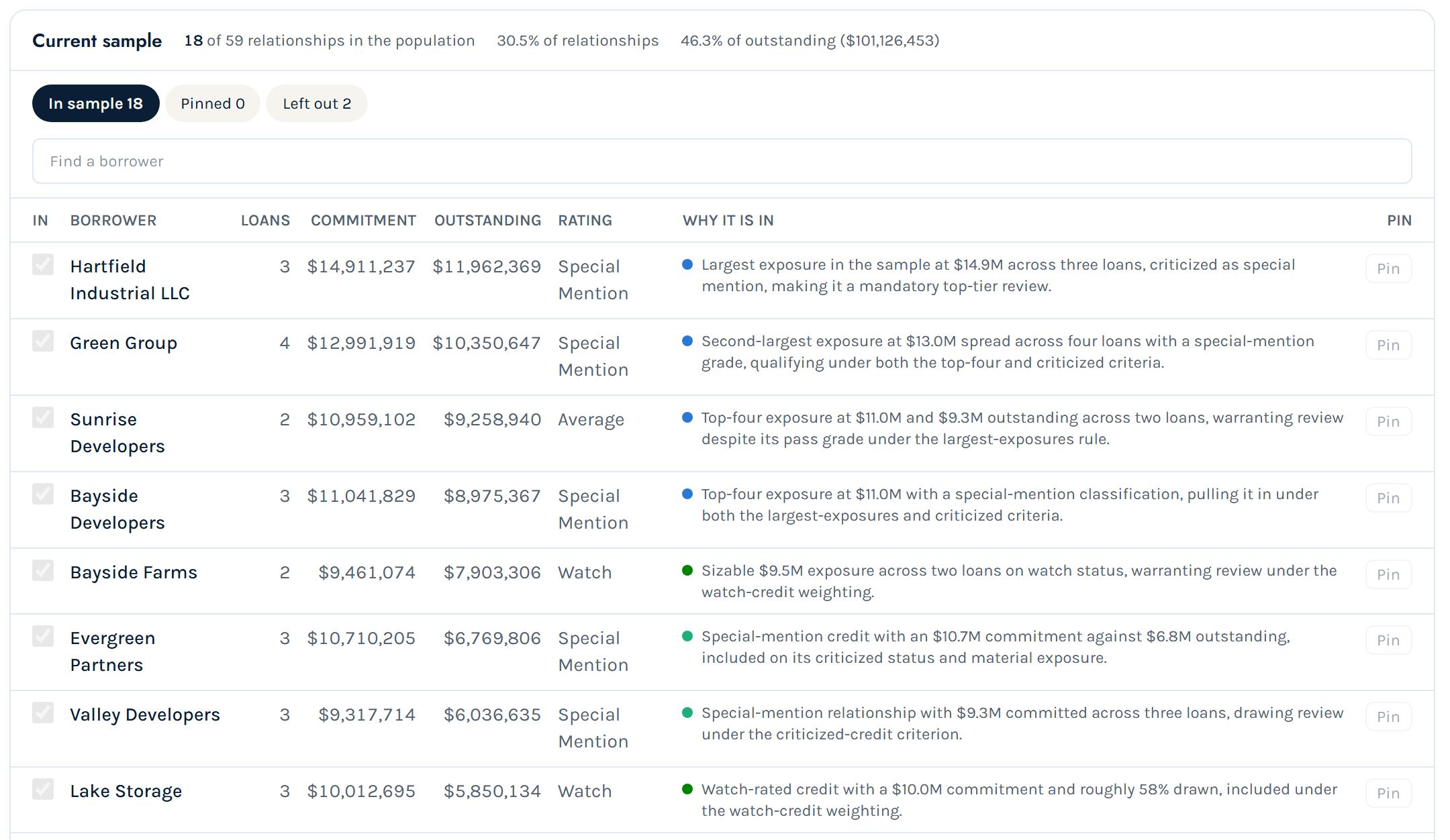
The sample table colors each relationship by the rule that selected it, so “why is this credit in the sample?” has an answer before anyone asks. Large books page and search, and pins sit in their own color.
- Each pick records the exact rule that took it
- Pinned-out relationships stay listed and stay in the coverage math
- Clear pins to hand the sample back to the rules
- The browser preview runs the same selection the server runs, so what you see is what finalizes
A clean population, however the bank exports it.
Core exports are messy: truncated names, codes instead of words, net and gross balances in different columns. Klerum maps the file, keeps loans to individuals out, and samples on the balance you choose.
- Columns mapped by best match, with a key fields panel that says what each one is used for
- FFIEC call code read first to keep consumer credit out of a commercial sample
- Gross balance, or net of participations sold
- Mappings remembered per bank, so the next trial starts from the confirmed one
A rationale per borrower, and a plain-English assistant.
The selection is deterministic: rules, not a model, decide what is in. The AI writes the per-borrower rationale and takes plain-English edits like “add the two largest Special Mention credits we're missing.” Its adds and drops become pins, so they survive the next re-run.
- Rules decide what is in; the model never picks a credit on its own
- A written reason beside every relationship in the sample
- Plain-English adds and drops become pins that survive a re-run
- The model sees aggregates only, never loan officer names
See Klerum on your own portfolio.
A 30-minute demo, no deck. Bring a sample trial and watch Klerum build a review population from your methodology.